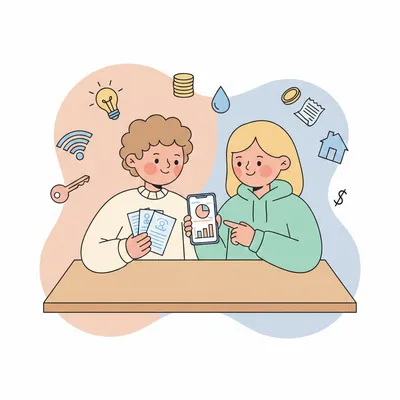
Moving in together is one of the most exciting steps in a relationship. But it can also be one of the most stressful if you’re not clear on how you’ll handle money.
The good news: with a little planning, you can avoid 90% of the financial conflicts couples have. Here’s how. (Also see our guide on managing finances as a couple for ongoing money management tips.)
Before Moving In: The Conversation You Need to Have
Before signing the lease or buying furniture, sit down and talk about money. Yes, it can be uncomfortable, but it’s much better than arguing later.
Questions You Should Answer Together
-
How much does each person earn? You don’t need to know the exact cent, but the approximate range.
-
Do you have debts? Student loans, credit cards, financing… Everything counts.
-
What’s your relationship with money? Who’s more of a saver? Who’s more of a spender?
-
What are your goals? Do you want to save for a trip? Buy a house? Have an emergency fund?
How to Split Expenses Fairly
“50/50” seems the fairest, right? But it isn’t always. For a deep dive into rent splitting methods, check out our guide on how to split rent fairly.
Option 1: Equal Split (50/50)
Each person pays half of everything. Works well when:
- You have similar incomes
- Both of you are comfortable with this arrangement
Option 2: Proportional Split
Each person contributes the same percentage of their salary. For example:
- You earn $3,000, your partner earns $4,500
- Shared expenses are $2,250/month
- You pay $900 (40%), your partner pays $1,350 (60%)
This option is fairer when there’s a significant income difference.
Option 3: Category Split
One pays rent, the other pays groceries and utilities. Works if the amounts roughly balance out.
Expenses You Should Share
These are the typical expenses couples living together share:
Fixed Expenses
- Rent or mortgage: The biggest expense
- Utilities: Electricity, water, gas, internet
- Renter’s insurance: If you have it
Variable Expenses
- Groceries: Weekly shopping
- Cleaning supplies: Detergent, toilet paper, etc.
- Maintenance: Small repairs, light bulbs
Joint Entertainment
- Dining out: When you go out together
- Travel: Getaways and vacations
- Entertainment: Netflix, movies, concerts
Expenses You Should NOT Share
- Personal clothing
- Individual hobbies
- Gifts for your family
- Personal medical expenses
Common Mistakes (and How to Avoid Them)
Mistake 1: Not Talking About Money
“We’ll figure it out as we go” is a recipe for disaster. Establish clear rules from the start.
Mistake 2: Not Tracking Expenses
“I think I paid more this month” is a phrase that destroys relationships. Keep a record.
Mistake 3: Not Having an Emergency Fund
The washing machine breaks, the car needs repairs… Having 2-3 months of expenses saved will save you from many problems.
Mistake 4: Mixing All Money Too Soon
Joint account for shared expenses + personal accounts for each = the perfect combination.
Recommended System for Day-to-Day
After trying various methods, this is what works best:
Step 1: Calculate Your Shared Expenses
Add up rent + utilities + groceries + other shared expenses. Let’s say it’s $2,700/month.
Step 2: Decide How to Split
If you choose proportional and one earns $3,500 and the other $5,000:
- Total income: $8,500
- Person A: 41% → $1,107/month
- Person B: 59% → $1,593/month
Step 3: Record Each Expense
Every time one pays for something shared, log it. At the end of the month (or week), settle up.
Step 4: Review Monthly
15 minutes per month to review expenses and adjust the budget if needed.
5 Tips for Starting Off Right
-
Set a “consultation limit”: For example, any shared expense over $75 gets discussed first.
-
Create a household fund: $150/month each for furniture, decor, and extras.
-
Have a monthly “financial meeting”: 15 minutes to review how you’re doing.
-
Use an app to keep track: Avoids the “I think I paid more” problem.
-
Be flexible: Circumstances change. What works today might not work in 6 months.
How ExpenseManager Helps You
With ExpenseManager you can:
- Add shared expenses with one tap: Photo of the receipt and done
- See who owes whom in real time: No arguments or calculations
- Set couple budgets: For categories like entertainment or groceries
- Each person keeps their own account: Privacy + transparency for shared expenses
Conclusion
Moving in together doesn’t have to be a financial minefield. With clear communication, rules established from the start, and the right tools, you can enjoy this new chapter without money being a problem.
Ready to start? Create your free ExpenseManager account and organize your finances from day one.